2026 Best Three Wheeled Vehicles for Global Buyers?
The 2026 market for Three Wheeled Vehicles is becoming more practical, diverse, and difficult to compare. Buyers now face electric cargo trikes, enclosed commuter models, delivery vehicles, and compact passenger designs. Each serves a different road, climate, and income level.
The International Energy Agency’s Global EV Outlook 2024 highlights strong electric three-wheeler activity in Asian markets, especially where affordable urban transport matters. Its findings also show that battery cost, charging access, and local policy strongly influence adoption. Meanwhile, the World Health Organization’s Global Status Report on Road Safety 2023 keeps a critical issue visible: convenience cannot replace occupant protection. Stability, braking performance, lighting, visibility, and helmet compatibility deserve careful attention.
This guide evaluates leading 2026 models through a global buyer’s lens. Range figures will be checked against battery size, payload, temperature, and real traffic conditions. A vehicle promising 200 kilometers may deliver much less with hills, passengers, or frequent stops. That detail matters. Service networks, spare-part availability, warranty terms, and charging standards also shape ownership costs. UNECE vehicle safety work provides useful regulatory context, although national approval rules still vary widely.
Our shortlist is not flawless. Some manufacturers publish limited test data, while independent reviews may cover only one market. That weakness deserves honesty. The best vehicle is not always the fastest or most expensive option. It is the model that matches local roads, daily workloads, legal requirements, and available support. The following overview identifies strong candidates for commuters, families, small businesses, and last-mile operators worldwide.
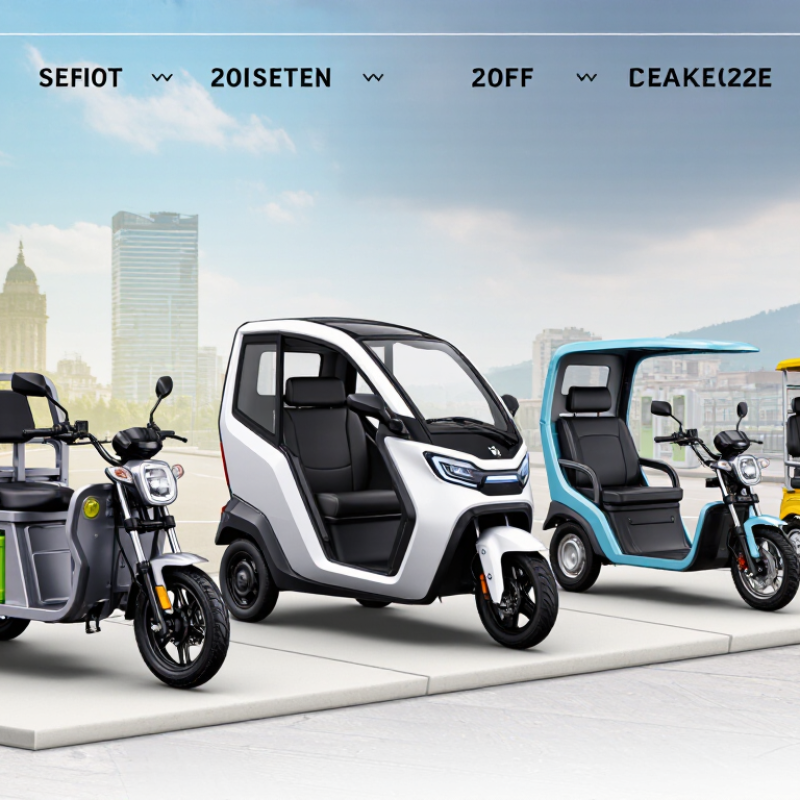
What Defines a Three-Wheeled Vehicle in 2026?
What Defines a Three-Wheeled Vehicle in 2026?
A three-wheeled vehicle has three road-contacting wheels and a powertrain designed for public-road travel. Its layout may use two front wheels and one rear wheel, or the reverse. That difference changes braking, cornering, storage, and passenger protection. The boundary is not always tidy. Some models tilt during turns, while others remain upright like compact utility vehicles.
Regulation also shapes the definition. UNECE vehicle categories distinguish powered three-wheelers by mass, speed, engine output, and seating configuration. Buyers should check local classification rules, because licensing and safety equipment can vary. The IEA’s Global EV Outlook 2024 reported nearly 600,000 electric three-wheelers sold in India during 2023. That figure shows strong demand for affordable urban transport, especially where narrow streets and delivery routes matter. Yet sales data alone cannot prove long-term reliability.
Tips: Measure your usual parking space first. Check turning width, weather protection, battery warranty, and certified braking systems. Ask for real payload figures, not promotional capacity. A lightweight frame may improve efficiency, but it can feel unsettled in crosswinds. I have also found that claimed range often falls sharply with heavy loads, cold weather, or frequent hills. This detail deserves more attention in 2026.
Key Types of Three-Wheeled Vehicles for Different Buyers
Urban commuters often choose a lightweight tilting scooter for narrow streets and short daily trips. Its two front wheels can improve confidence on wet corners, while the leaning system keeps handling familiar. A small weather screen, under-seat storage, and a rechargeable battery matter more than impressive speed. I have found that easy parking often saves more time than extra range. Still, some riders dislike the learning curve.
Families and leisure riders may prefer a reverse trike with two wheels at the front. It usually feels stable when stopping and offers space for a passenger or luggage. Buyers should inspect seat support, braking control, lighting, and suspension quality. A comfortable test ride reveals problems that specifications hide. Tall riders may find the foot position cramped.
Small businesses, farmers, and delivery users need a cargo trike with a reinforced rear platform or enclosed box. Electric utility models suit quiet neighborhood work, but battery capacity changes sharply under heavy loads, hills, and cold weather. Check payload ratings, charging time, replacement parts, and local service access. An enclosed cabin protects goods from rain, although it can reduce visibility and increase heat. Rural buyers may need larger tires and stronger ground clearance. The compromise is real: more carrying ability often means slower handling, wider storage space, and higher maintenance costs.
The Best Three-Wheeled Vehicles for Global Markets in 2026
The Best Three-Wheeled Vehicles for Global Markets in 2026
Three-wheeled vehicles are gaining attention across urban and commercial markets. Their narrow body suits crowded streets, while two rear wheels can improve low-speed stability. According to the International Energy Agency’s Global EV Outlook 2024, India sold more than 580,000 electric three-wheelers in 2023. They represented roughly 55% of the country’s three-wheeler sales. That figure shows practical demand, not only showroom interest.
For global buyers in 2026, the strongest choices should combine electric efficiency, weather protection, and simple servicing. Grand View Research reports continued double-digit growth in the electric three-wheeler market through the decade. Battery capacity matters, but usable range matters more. A vehicle traveling 80 to 120 kilometers per charge may fit urban delivery work better than a larger, heavier model. Fast charging helps, although it can increase battery stress and infrastructure costs.
Buyers should inspect payload ratings, braking performance, battery warranties, and parts availability. UNECE safety requirements provide a useful reference, but local approval rules still vary widely. Do not trust range figures without testing them under heat, hills, passengers, or cargo. Real roads are less polite. A quiet electric drivetrain can reduce operating noise, yet repair training may remain limited in smaller cities. The market is developing quickly, and some advertised specifications still deserve careful questioning.
Safety, Performance, Range, and Comfort Compared
2026 Best Three Wheeled Vehicles for Global Buyers?
Safety should lead every three-wheeled vehicle comparison. The World Health Organization’s Global Status Report on Road Safety 2023 records about 1.19 million annual road deaths worldwide. That figure makes stability, braking, and visibility practical priorities, not marketing phrases. Look for electronic stability assistance, linked braking, strong occupant restraints, and clear lighting. However, safety ratings are difficult to compare globally. Vehicle classifications and testing rules differ between regions. That limitation deserves more attention.
Performance is not only acceleration. A useful model should remain composed on wet roads, steep ramps, and uneven city surfaces. Electric versions often deliver immediate torque and quiet operation. The International Energy Agency’s Global EV Outlook 2024 identifies electric two- and three-wheelers as an important growth segment, especially in emerging markets. Range claims need caution. EPA testing provides a repeatable reference, but cold weather, passenger weight, hills, and heating can reduce real-world distance. A practical buyer should check charging time, battery warranty, and accessible charging points.
Comfort becomes obvious after one tiring hour. Supportive seating, low vibration, adjustable controls, and weather protection matter more than a glossy dashboard. ISO 2631 offers a useful framework for evaluating whole-body vibration, although many buyers never see those measurements. Storage also matters. A helmet, groceries, and a small work bag quickly expose weak design. I would still question impressive range figures without independent testing; numbers can look precise while daily conditions remain messy.
How to Choose and Import the Right Three-Wheeled Vehicle
How to Choose and Import the Right Three-Wheeled Vehicle
Choosing a three-wheeled vehicle starts with the job, not the shape. Define payload, daily distance, road surface, passenger capacity, and parking space. A compact cargo model may suit narrow urban streets, while a heavier model needs stronger brakes and suspension. The IEA’s Global EV Outlook 2024 reported that electric three-wheeler sales exceeded half of new three-wheeler sales in India during 2023. This signals strong demand, but regional performance can differ sharply.
Check the battery chemistry, usable capacity, charging time, and replacement cost. Ask for independent test results, not only factory claims. Confirm the vehicle’s voltage matches local charging equipment. Import documents should clearly show the tariff code, declared specifications, battery details, commercial invoice, packing list, and certificate of origin. Customs rules vary by destination. Battery transport may also require special documentation under international shipping standards. The World Bank’s Logistics Performance Index 2023 shows that border delays and shipment reliability remain major purchasing risks. A cheap unit can become expensive after storage fees, taxes, and missing parts.
Tips: Request a sample inspection before placing a large order. Measure the crate, turning radius, seat height, and ground clearance. Calculate total landed cost, including freight, duty, assembly, service tools, and training. Keep written warranty terms. I would also budget for mistakes; advertised range may fall in cold weather, heavy traffic, or hilly areas. A small test shipment is slower, but it can expose weak packaging and poor after-sales support.
2026 Best Three-Wheeled Vehicles for Global Buyers: How to Choose and Import the Right Vehicle
This chart compares the maximum continuous or net power limits used in selected European L-category classifications. L2e vehicles are generally low-speed three-wheel mopeds, while L5e vehicles are road-going motor tricycles. L7e is included as a higher-power quadricycle reference for buyers comparing three- and four-wheel platforms. Before importing, confirm local homologation, driving-licence, safety, emissions, taxation, and registration requirements.
Regulatory reference: Regulation (EU) No 168/2013, Annex I. Requirements may differ outside the European Union.