• (714) 253-3115

10 Best Flat Wiper Manufacturers for Global Buyers

Choosing a Flat Wiper manufacturer is about more than comparing prices or browsing a polished catalog. Global buyers need products that match vehicle applications, local weather, supply requirements, and quality expectations. A blade that performs well in mild rain may behave differently under heat, dust, or frequent temperature changes. Small details matter: adapter fit, rubber compound, frame design, packaging, and replacement availability.

This guide introduces ten manufacturers for buyers assessing international supply options. It considers practical factors such as product range, manufacturing capabilities, quality-control processes, customization, export experience, and after-sales support. These points can help procurement teams prepare useful questions before requesting samples or quotations. They do not replace independent checks. Verify specifications against the intended vehicles, review relevant test documentation, and confirm lead times and service arrangements directly with each supplier. A confident sales presentation is not proof of consistent production.

There is no universal best choice. A large supplier may offer broad coverage, while a focused producer may provide more flexibility on selected designs. That trade-off deserves attention. The manufacturers featured here are starting points for research, not a substitute for technical evaluation. Compare like with like, and ask how performance is checked across batches. Even experienced buyers can miss a fitment detail. A careful shortlist can reduce that risk and support a more reliable sourcing decision.
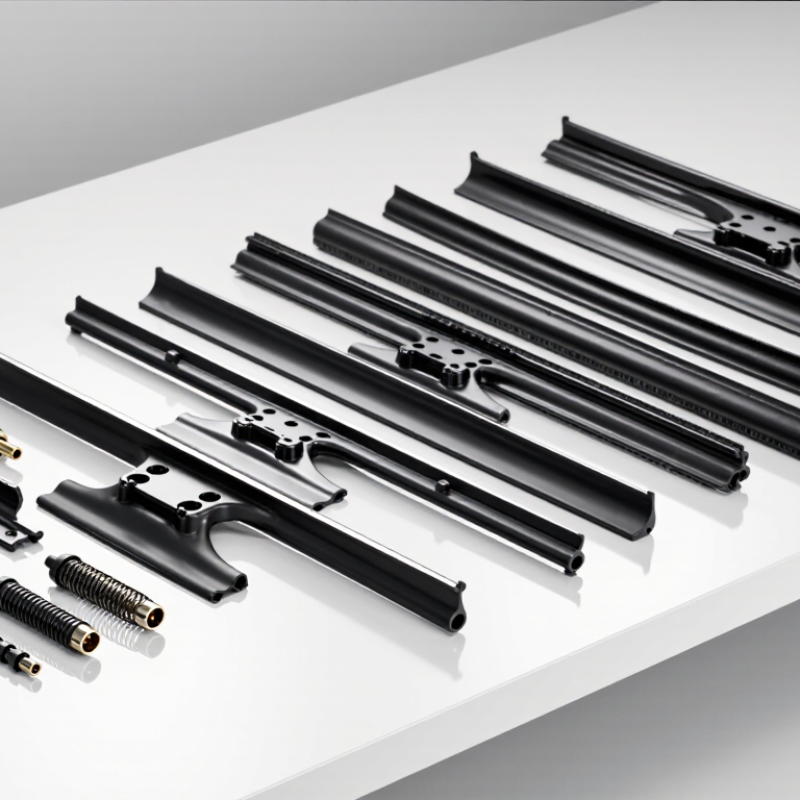
10 Best Flat Wiper Manufacturers for Global Buyers

Flat Wiper Blade Basics: Beam-Spring Design, Spoilers, and Contact Pressure

A Flat Wiper Blade uses a flexible spring-steel or composite beam instead of several exposed hinged frames. The beam spreads pressure along the rubber edge and follows the windshield’s curve. On a gently curved screen, this can help the blade maintain contact from end to end. Check the match carefully. A beam that is too stiff may lift at the edges, while one that is too soft may struggle to clear water evenly.

A spoiler sits along the blade’s upper surface and uses airflow to press the blade toward the glass at road speed. Its shape and orientation matter; a poorly matched spoiler may add little benefit. Contact pressure also depends on the vehicle’s wiper arm, blade length, rubber profile, and windshield curvature. Too little pressure can leave narrow wet streaks. Too much may increase friction and cause chatter. Not always obvious. In practical checks, inspect the wipe pattern after the glass is wet, then look for uneven marks or lifting near the tips. This is a useful test, though not a full substitute for checking fit and arm condition. A clean windshield helps, too.

Flat Wiper Blade Sizes: Nominal Lengths

Common nominal replacement lengths shown in inches and converted to centimeters. Always check vehicle-specific fitment before buying.

A flat blade’s beam spring helps distribute contact pressure along the windscreen, while its spoiler is designed to reduce wind lift. Blade length alone does not determine fit or wiping performance.

Global Demand Context: OICA Reported 93.5 Million Vehicles Produced in 2023

OICA’s 2023 production report recorded 93.5 million motor vehicles built worldwide, a 10% rise from 2022. This scale gives flat-wiper manufacturers a large original-equipment and replacement market to serve. Each vehicle needs blades that fit its windshield, arm connection, and operating conditions. A substantial installed base. Yet production is not replacement demand; buyers should treat the figure as market context, not a sales forecast.

Vehicle mix matters too. The International Energy Agency’s Global EV Outlook 2024 reported nearly 14 million electric cars sold in 2023, about 18% of global car sales. That shift adds model variations and may bring different windshield shapes, sensors, and fitment requirements. For global sourcing, check coverage by vehicle model, connector accuracy, wiping consistency, and resistance to heat, rain, and road dust. Ask suppliers for documented fitment checks and clear quality-control procedures. A blade that performs well on a dry test track may chatter during a cold, wet commute. Data helps narrow the market, but it cannot replace hands-on validation.

Manufacturer Qualification: Compare SAE J903 Testing and IATF 16949 Certification

For global buyers, SAE J903 testing and IATF 16949 certification answer different questions. SAE J903 provides a framework for evaluating windshield wiping system performance. Ask for reports tied to the relevant standard revision and the product being quoted.

Check test conditions, including glass shape, sweep pattern, speed, and environmental setup. A result without these details is hard to compare.

IATF 16949 concerns a manufacturer’s quality management system, not a guarantee that every wiper blade will perform well. Confirm the certificate is current and covers the actual production site and relevant activities. Then review how the supplier handles incoming materials, production checks, traceability, and corrective actions.

In practice, a clear lot record can be more useful than a polished presentation. I would still verify that sample results match the production controls described; paperwork can leave gaps.

Tips: Request a recent SAE J903 test report and verify its scope. Ask for the site’s IATF 16949 certificate, then compare sample and batch inspection records. Small checks matter.

10 Best Flat Wiper Manufacturers for Global Buyers: Products, Markets, and Strengths

Global buyers comparing ten flat-wiper manufacturers should look beyond headline prices. Product range, market coverage, and dependable supply matter more. OICA’s 2023 production statistics report 93,546,599 motor vehicles produced worldwide. That figure signals a large vehicle base, but it does not measure wiper demand directly. Replacement cycles, climate, and local vehicle types also shape purchasing needs.

Manufacturers differ in blade materials, connector options, packaging, and production scale. Some focus on broad vehicle coverage; others may offer stronger regional fit or flexible private-label production. Check whether the range includes beam-style blades, rear wipers, and adapters for older vehicles. Ask about testing records, batch traceability, and lead times. A supplier serving several markets may simplify sourcing, yet its catalog can still leave gaps. A neat scorecard misses real-world fit.

Tips: Request samples for common local vehicles, then test contact across a dry windshield and after light rain. Confirm carton dimensions and replacement-part availability before placing a large order. Don’t rely on price alone.

Procurement Evaluation: Fitment Coverage, MOQ, Lead Time, Warranty, and Quality Controls

10 Best Flat Wiper Manufacturers for Global Buyers

Fitment coverage is more than a long catalog. Ask suppliers to map blade lengths, connector types, and vehicle applications, then verify a sample against your target arms. S&P Global Mobility reported that the average age of U.S. light vehicles reached 12.6 years in 2024. That figure is not a global fleet measure, but it highlights why older-vehicle coverage matters. Check catalog update dates, too; an impressive spreadsheet can still be stale.

Compare MOQ and lead time by SKU, order quantity, and shipping method. Request separate estimates for production and transit, plus written terms for seasonal capacity. A low MOQ may come with higher unit costs or limited packaging choices. Small details matter. Confirm how the supplier handles split shipments, delayed components, and forecast changes before placing a trial order.

Quality claims need evidence. Request inspection records for dimensions, connector fit, wiping performance, and batch traceability. Ask whether testing covers temperature changes, UV exposure, and repeated operating cycles. Review the defect definition, warranty period, claim window, and replacement process in writing. A warranty sounds reassuring. Its value depends on response time and proof requirements. One imperfect sample should trigger investigation, not an automatic rejection; repeated failures deserve a clear corrective-action report.

10 Best Flat Wiper Manufacturers for Global Buyers — Procurement Evaluation: Fitment Coverage, MOQ, Lead Time, Warranty, and Quality Controls

Use this supplier scorecard to compare manufacturers without relying on unverified company-specific claims. MOQ, production lead time, warranty terms, and fitment coverage vary by product, order volume, and destination market; confirm each item in a current quotation and supporting documents.

Evaluation Dimension What to Assess Evidence to Request Buyer Evaluation Check
1. Vehicle Fitment Coverage Range of vehicle applications, arm interfaces, blade lengths, and regional vehicle coverage. Current application catalogue, vehicle fitment data, adapter list, and sample part numbers for priority markets. Cross-check a sample of applications against reliable vehicle data. Confirm that the listed connector and blade length match each application.
2. MOQ and Order Flexibility Minimum order quantity by SKU, adapter, packaging option, and private-label configuration. Written MOQ schedule showing any differences between standard products, customized products, and mixed-SKU orders. Compare the quoted MOQ with forecast demand, trial-order needs, and the cost of holding inventory across multiple fitments.
3. Production Lead Time Quoted production time for samples, repeat orders, and orders requiring custom packaging or tooling. Order-to-shipment schedule, sample timeline, production capacity statement, and written confirmation of the lead-time starting point. Clarify whether lead time begins after deposit, artwork approval, or final specification approval. Check peak-season assumptions separately.
4. Warranty and Claims Handling Warranty period, coverage conditions, exclusions, and the process for investigating product complaints. Written warranty policy, claim documentation requirements, defect investigation procedure, and proposed remedy options. Confirm the warranty start date, treatment of installation-related issues, evidence required for claims, and response process for recurring defects.
5. Quality Management Controls Whether production and inspection activities are controlled and documented consistently. Quality-management certificates where applicable, inspection plans, incoming-material checks, in-process checks, and final inspection records. Verify certificate validity and scope with the issuing body where possible. Ask how nonconforming batches are identified and contained.
6. Product and Material Specifications Consistency of the blade strip, frame or support structure, connectors, and exposed materials. Product specification sheets, material declarations, approved component list, and change-control procedure. Request written notice and approval requirements for changes to materials, suppliers, tooling, or product dimensions.
7. Functional and Durability Testing Testing relevant to wipe quality, fit, operation, and resistance to environmental conditions. Test methods, sample test reports, acceptance criteria, and details of the test equipment or external laboratory used. Check that test conditions and acceptance limits are documented and relevant to the intended vehicle, climate, and market.
8. Traceability and Corrective Action Ability to trace finished goods to production records and investigate quality issues. Batch or date coding examples, traceability records, complaint logs, root-cause reports, and corrective-action records. Ask the supplier to demonstrate how a selected production batch can be traced through inspection and material records.
9. Packaging and Label Compliance Protection during transport and accuracy of labels, barcodes, and market-specific information. Packaging drawings, carton specifications, label samples, barcode format, and any required language or recycling information. Approve packaging artwork and label data before production. Confirm carton dimensions and packing quantities for the planned shipment.
10. Export Readiness and Delivery Terms Experience preparing export documents and meeting the buyer’s requested shipping arrangements. Quotation with named Incoterms® 2020 rule and place, packing list sample, commercial invoice details, and shipment schedule. Confirm responsibilities for freight, insurance, customs documentation, and delivery milestones before placing the order.
CALL NOW