China Top Motor Parts Suppliers and Their Impact on the Industry?
China's motor parts industry has become a vital player in the global market. Experts believe this sector is shaping the future of automotive manufacturing. According to Dr. Liu Ming, a renowned expert in automotive supply chains, “The innovation in motor parts is accelerating growth and competition.”
Major suppliers in China have introduced advanced technologies, enhancing efficiency. Their impact extends beyond borders, influencing international standards and practices. Companies like BYD and SAIC have set benchmarks in quality and performance.
However, challenges remain. Dependence on a few key suppliers can pose risks. The industry's rapid evolution requires continuous adaptation. Businesses must address issues like sustainability and supply chain resilience. The journey ahead for China's motor parts sector is both promising and complex.
Overview of China's Motor Parts Industry Landscape
China's motor parts industry plays a pivotal role in the global automotive market. In 2022, the industry was valued at approximately $85 billion and is expected to grow at a CAGR of 5.4% through 2027. This growth is driven by rising demand for electric vehicles (EVs) and advancements in manufacturing technology.
The landscape of motor parts suppliers in China is diverse. There are over 30,000 companies operating in this sector, ranging from large manufacturers to small suppliers. A 2021 report indicated that about 70% of these firms focus on low-cost, high-volume production. However, the industry faces challenges, such as supply chain disruptions and increasing raw material costs, which can impact profitability. Furthermore, quality control remains a critical issue. Many suppliers still struggle to meet international standards, creating doubts about reliability.
Electric vehicles are reshaping the market dynamics. China's transition to EVs has led to changes in parts demand. Traditional parts suppliers are now exploring opportunities in EV components, such as batteries and electric motors. Yet, adapting to these new technologies requires significant investment. Some suppliers are hesitant due to the uncertainties and risks involved. Balancing innovation with cost management is essential for long-term competitiveness.
Key Players in the Chinese Motor Parts Supply Chain
In the Chinese motor parts supply chain, several key players emerge as crucial contributors. These suppliers provide the essential components that drive vehicle performance. Their impact on the industry is profound, influencing everything from production efficiency to cost competitiveness. With the rapid advancement of technology, these suppliers are adapting quickly to meet evolving market demands.
It’s essential for industry stakeholders to recognize the importance of collaboration. Suppliers that can develop strategic partnerships with manufacturers tend to thrive. This collaboration often leads to innovation, allowing both parties to share resources and insights. Investing in these relationships can yield significant benefits, enhancing product quality and reducing time to market.
Consider the importance of quality control in the supply chain. Maintaining consistent standards is vital for long-term success. Suppliers should implement rigorous quality assurance processes. Small defects can lead to significant setbacks in production. Continuous improvement should be the goal, as the industry is always evolving. Engaging in regular audits and feedback loops can identify areas needing enhancement.
Impact of Motor Parts Suppliers on the Industry
Impact of Top Suppliers on Global Automotive Manufacturing
The global automotive manufacturing scene is significantly shaped by the actions of
top motor parts suppliers in China. These suppliers produce a vast array
of components, from engine parts to electronic systems. Their ability to provide high-quality, cost-effective components has disrupted traditional
manufacturing landscapes. As they scale operations, they influence pricing and
innovation across the industry.
However, this rise comes with challenges. The heavy reliance on a few suppliers can
cause vulnerabilities. Disruptions in supply chains can lead to production
delays. Moreover, the rapid pace of technological advancement does not always
align with the capabilities of these suppliers. This gap raises concerns about
consistency and quality control. In an ever-evolving market,
maintaining high standards is crucial.
Industry stakeholders must recognize the importance of fostering collaboration with
these suppliers. Building strong relationships can enhance reliability
and drive innovation. Yet, it is also vital to explore diversification strategies. By reducing dependence
on singular sources, manufacturers can better navigate fluctuations in the market.
Despite the benefits, reflection on these dynamics is essential for sustainable growth
in the automotive sector.
Technological Innovations by Chinese Motor Parts Suppliers
Chinese motor parts suppliers are increasingly transforming the automotive industry through technological innovations. According to a report by McKinsey, the Chinese automotive sector is expected to reach a market value of over $1 trillion by 2030, largely driven by advancements in electric vehicles (EV) and smart technology integration. This growth is propelled by suppliers investing heavily in research and development. Innovations in battery technology and lightweight materials are expected to reduce production costs and enhance vehicle performance.
Moreover, there is a notable trend towards sustainability. A study indicates that over 70% of Chinese suppliers are focusing on green technology. However, while the industry progress is commendable, challenges remain. The reliance on traditional manufacturing processes can hinder the rapid adaptation needed for fully electric and autonomous vehicles. Industry experts suggest that more collaboration between suppliers and technology firms is required to bridge this gap.
As suppliers push boundaries, competition also intensifies. Not every innovation leads to market success. Some advancements may not resonate with consumer needs or fail to comply with international standards. Despite the robust growth trajectory, careful consideration must be given to maintaining quality and reliability throughout these transformations.
Future Trends and Challenges in China's Motor Parts Sector
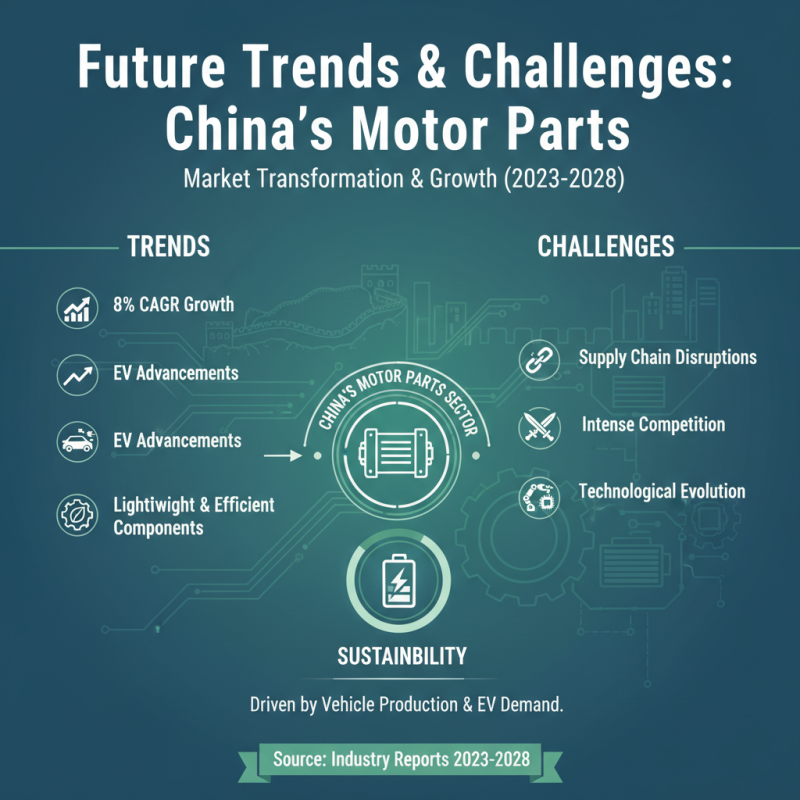
China's motor parts sector is undergoing significant transformation. Recent reports indicate that the market is expected to grow at a compound annual growth rate (CAGR) of 8% from 2023 to 2028. This growth is driven by increasing vehicle production and advancements in electric vehicles (EVs). Notably, the demand for lightweight and efficient components is on the rise as consumers and manufacturers alike prioritize sustainability.
However, challenges persist. The supply chain is fragile and often faces disruptions. Recent data suggests that 40% of motor parts manufacturers have experienced delays due to raw material shortages. This has forced players to reevaluate their inventory strategies and sourcing practices. Furthermore, the rush towards automation and AI integration raises questions about job displacement within the sector. Companies must strike a balance between innovation and workforce stability.
As China pivots towards green technology, the focus on EV-related motor parts is paramount. In 2022, over 25% of new vehicles sold were electric. The shift poses both an opportunity and a challenge for traditional motor parts suppliers, who need to adapt quickly to remain competitive. Investment in R&D is crucial for these companies. It will help them keep pace with evolving market demands while addressing environmental concerns.