How to Choose the Best Automotive Parts for Your Vehicle?
Choosing the right automotive parts for your vehicle can feel overwhelming. With countless options available, it is crucial to understand your needs. Quality automotive parts ensure your vehicle runs smoothly and efficiently. They directly affect performance, safety, and durability.
When selecting parts, consider compatibility with your vehicle's make and model. Poorly matched components can lead to damage and costly repairs. Examine both branded and aftermarket parts. Branded parts often guarantee quality, while some aftermarket options might surprise you.
Take the time to read reviews and seek recommendations. Personal experiences can provide insight into a part's reliability. Don't rush into a purchase, as choosing the wrong part can be a costly error. Automotive parts are an investment in your vehicle's future, so proceed with care.
Understanding Your Vehicle’s Specific Needs
When selecting automotive parts, understanding your vehicle's specific needs is critical. Each vehicle has unique specifications, from engine types to drivetrain layouts. Many drivers overlook their vehicle's manual, which typically provides essential information. According to industry surveys, about 40% of vehicle owners do not consult this important resource before buying parts. This can lead to purchasing incompatible components.
Tip: Spend time studying your vehicle manual. It often includes key details about compatible parts, which can save you money and time. Know the model, year, and specifications to ensure the right fit. Parts that aren't compatible may cause serious damage or performance issues.
Consider utilizing online databases that offer specifications for various vehicles. A report from a leading automotive group shows that using these resources can reduce the chances of mispurchases by nearly 30%. However, the internet can also be a double-edged sword. Too much information can lead to confusion. Not every source is reliable, leading to potential pitfalls.
Tip: Double-check the credibility of online references before deciding. Knowledge is power, but misinformation can cost you dearly.
Identifying the Types of Automotive Parts Required
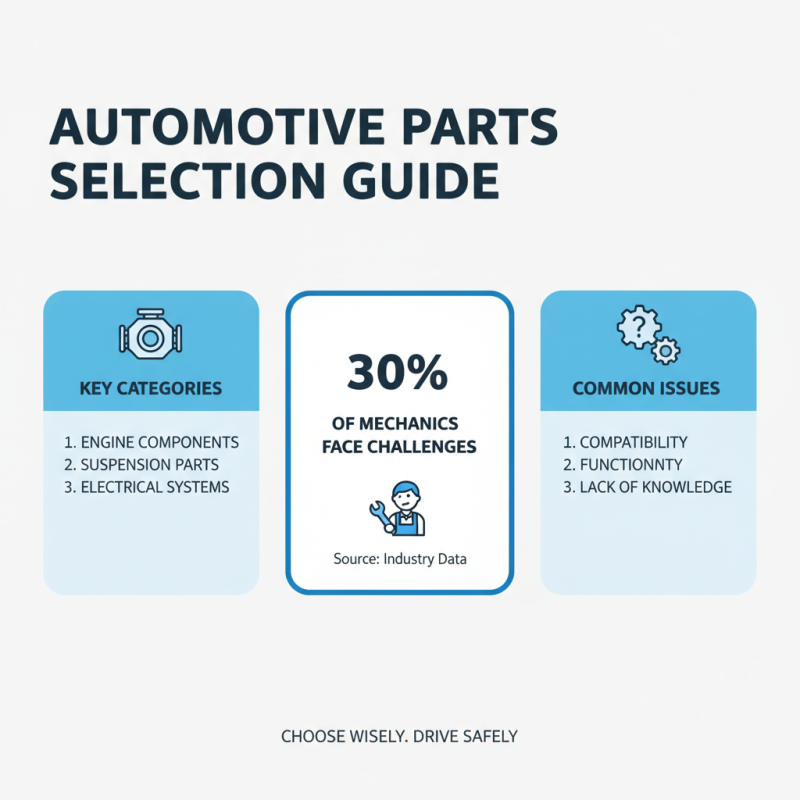
When choosing automotive parts, identifying the specific types you need is crucial. There are many categories, including engine components, suspension parts, and electrical systems. Data shows that nearly 30% of mechanics face challenges in selecting proper parts. This confusion often stems from a lack of knowledge about compatibility and functionality.
Tip: Always consult your vehicle's manual. It provides essential information about the necessary specifications. Engaging with experts can also clarify your doubts. Automotive parts come in OEM and aftermarket varieties. Each has its pros and cons. While OEM parts ensure fit and function, aftermarket options can be more affordable.
Remember, quality matters. Poor-quality parts can lead to bigger issues down the line. Research reviews and ratings before making a purchase. While cost is important, focus on durability and performance as well. The cheapest option may not be the best in the long run. Missteps in part selection can affect your vehicle's safety and efficiency. Be diligent in your research and make informed decisions.
Evaluating Quality and Brand Reputation
When evaluating automotive parts, brand reputation plays a significant role. A reliable brand often indicates quality and durability. According to recent industry reports, around 70% of consumers prioritize well-known brands when shopping for parts. They believe that established companies are more likely to offer superior products.
Quality assessment can be tricky. Not all reputable brands provide the same level of excellence. Some may have inconsistent product lines, which can lead to disappointment. It's essential to read reviews and compare experiences from other users. Research shows that up to 30% of customers experience issues with certain brands, despite their popularity. Trust your instincts and cross-check information from multiple sources.
Certification and testing can be indicators of quality too. Many parts undergo rigorous testing to meet safety and performance standards. However, not all brands follow these guidelines strictly. This fluctuating quality raises concerns. It's wise to question the claims of even the most trusted names. Remember, the best decisions stem from careful evaluation and analysis of all available data.
Considering Compatibility and Fitment
Choosing the right automotive parts is crucial. Compatibility and fitment are essential for performance and safety. A well-fitted part enhances vehicle efficiency. On the flip side, an incompatible part may cause issues. It can lead to costly repairs or safety hazards.
When selecting parts, always check specifications. Look for details that match your vehicle's make and model. Small differences can lead to significant problems. For example, using a mismatched filter might reduce engine performance. It’s wise to consult online resources or manuals that provide accurate specifications.
Tips: Measure your current parts if possible. This can provide added assurance for fitment. Also, consider visiting forums for advice from other car owners. Their experiences can highlight common pitfalls. Remember, taking your time can save future headaches. Quality and compatibility should always come first.
Budgeting for Automotive Parts Purchases
When budgeting for automotive parts, understanding your vehicle’s needs is crucial. Assess the parts that require replacement, and prioritize them based on urgency and cost. Road hazards can damage components. Check for signs of wear and tear; it's often cheaper to replace parts before they fail completely.
Tips: Always research the average prices for the parts you need. This will help you avoid overpaying. Don’t forget to factor in installation costs, if you're not doing it yourself. Sometimes, buying a part directly from a manufacturer instead of a retailer can save you money.
Be cautious of deals that seem too good to be true. Low-quality parts may lead to more repairs later. Taking shortcuts can have long-term costs. Setting a budget can help mitigate impulse purchases. List out necessary parts and allocate funds accordingly. You might need to adjust your budget as prices fluctuate. It's essential to stay flexible and prepared for unexpected expenses.