How to Choose the Right Lifting Gear for Your Needs?
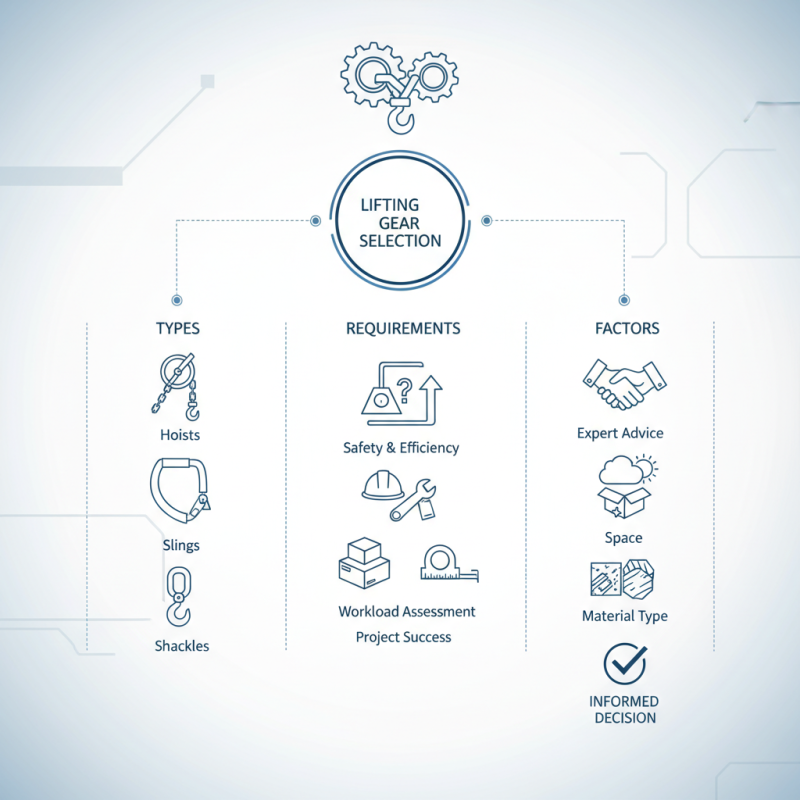
Choosing the right Lifting Gear is crucial for safety and efficiency. The type of lifting gear you select can determine the success of your project. Each job has unique requirements, and understanding them is essential.
Lifting gear comes in various forms, including hoists, slings, and shackles. Each type has specific features and limitations. For instance, using a sling that isn’t rated for the weight can lead to dangerous situations. Ensuring you have the right gear means assessing your workload carefully.
It's important to seek expert advice from manufacturers or suppliers. They can provide insights based on experience and expertise. Consider also the environment where the lifting will occur. Factors like weather, space, and material type can impact your choice. Reflecting on these details ensures better decisions regarding your lifting gear.
Understanding the Different Types of Lifting Gear Available
When choosing lifting gear, it's crucial to understand the diverse types available. From cranes to hoists, each piece of equipment serves a specific purpose. Cranes are excellent for lifting heavy loads over long distances, while hoists are ideal for smaller, vertical lifts. Understanding these differences can help you select the right equipment for your project.
Lifting slings are another option. They come in various materials, such as nylon or chain. Each type offers unique benefits. For instance, nylon slings are lightweight and flexible, making them easy to handle. Chain slings, on the other hand, provide strength and durability for heavy tasks. Consider your load, environment, and lifting needs before making a choice.
It's also important to factor in safety features. Many modern lifting gears have built-in safety mechanisms, but human error can still happen. Regular inspections can prevent accidents. Reflect on your experience with lifting tasks. Have you overlooked safety in the past? Each choice matters, so take your time to evaluate what's best for your situation.
Assessing Your Load Requirements and Weight Capacity
When selecting lifting gear, understanding your load requirements is crucial. Load capacity is a key factor. The Occupational Safety and Health Administration (OSHA) recommends a safety factor, suggesting that lifting equipment should support at least 125% of the maximum load it will encounter. This ensures a buffer for unexpected weights or conditions.
A typical error involves underestimating load weights. For example, lifting gear rated for 1,000 pounds may not accommodate the sum of dynamic loads, such as bouncing or swaying. According to industry reports, nearly 33% of workplace injuries stem from inadequate lifting gear. Thus, understanding load dynamics is essential for safety.
Weight capacity is equally significant. It’s not enough to know the maximum static load. Factors like gear wear and environmental conditions can impact safety rates. For instance, temperature variations can weaken certain materials, requiring more frequent inspections. Addressing these factors can prevent accidents and ensure reliability in your lifting operations.
How to Choose the Right Lifting Gear for Your Needs?
| Lifting Gear Type | Load Capacity (kg) | Best Use Case | Weight (kg) | Material |
| Chain Hoist | 1000 | Construction Sites | 25 | Steel |
| Electric Winch | 500 | Industrial Lifting | 15 | Aluminium |
| Manual Hoist | 600 | Warehouse Use | 10 | Carbon Steel |
| Pallet Jack | 2500 | Material Handling | 80 | Steel & Plastic |
| Forklift | 3000 | Heavy Lifting | 4500 | Steel |
Evaluating Material and Durability for Safety and Longevity
Choosing the right lifting gear is crucial for safety and efficiency. When evaluating material, consider the weight capacity and the environment in which the gear will be used. Steel, for instance, is known for its strength. However, it can be susceptible to rust, especially in wet conditions. In contrast, synthetic materials offer resistance to moisture, but may wear out faster under heavy use.
Durability is another key factor. Lifting equipment should not just meet the immediate needs but also withstand long-term wear and tear. Regular inspections can help identify potential weaknesses. Many users find that wear along seams or connectors can pose risks. It's important to evaluate these areas frequently.
Think about your specific requirements. Are you using the gear for heavy loads daily, or occasional lighter lifting? This will inform your choice. There's often a trade-off between weight and durability. Heavier materials may offer better longevity, while lighter ones can improve ease of use. Reflecting on these choices is essential for maintaining safety and efficiency in your lifting operations.
Considering the Working Environment and Conditions
Choosing the right lifting gear is crucial for ensuring safety and efficiency. The working environment significantly impacts this decision. For example, areas exposed to moisture or chemicals require corrosion-resistant materials. According to a report from the Occupational Safety and Health Administration (OSHA), over 50% of workplace injuries come from improper lifting equipment.
In a manufacturing setting, load capacities vary. Understand the weight and dimensions of items you're lifting. A detailed analysis can reveal that 30% of equipment fails to meet the necessary standards. Data from the National Institute for Occupational Safety and Health (NIOSH) emphasizes that poorly maintained gear contributes to 20% more accidents. Knowing the environment helps narrow your options.
For outdoor projects, consider weather conditions. Rain or high winds can affect lifting operations. A study from the American Society of Safety Engineers indicates that improper environmental assessments lead to 40% of on-site injuries. Always prioritize gear that fits not just the load but also the conditions. A reflective approach helps to identify potential pitfalls in your choice of equipment.
Exploring User-Friendliness and Ease of Operation
Choosing the right lifting gear is crucial for safety and effectiveness. When focusing on user-friendliness, consider the operational training required for each piece of equipment. A 2021 industry report indicated that up to 30% of lifting accidents are due to operator errors. Therefore, ease of use significantly impacts overall safety.
Tip: Prioritize gear with intuitive controls. If equipment feels complicated, training costs rise.
Another aspect is the clarity of operational instructions. Gear with straightforward manuals tends to be favored. In studies, 68% of users report higher confidence levels when instructions are clear. This shows that accessibility to information enhances user experience and safety.
Tip: Look for visual aids in manuals. Diagrams make understanding faster and easier.
Reflecting on gear choices can lead to better outcomes. Sometimes, highly advanced models may seem attractive but can overwhelm users. Balancing functionality with simplicity is essential. Equipment should empower operators rather than hinder them with complexity. Keep in mind that effective lifting gear is not just about capability; it must also support ease of operation.