• (714) 253-3115

Who Are the Top Professional Kart Manufacturers in China?

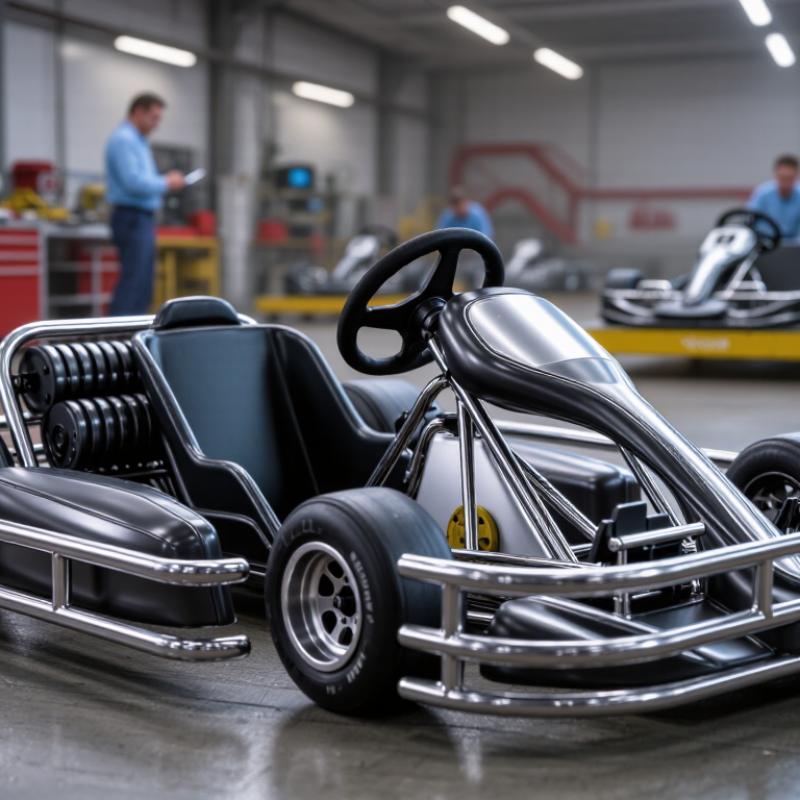
China’s Professional Kart manufacturing scene deserves more than a sales-led ranking. Buyers need to compare frame construction, weld quality, steering response, braking consistency, parts availability, and documented testing. A clean chassis can look convincing under showroom lights. Its real character appears through repeated laps, tight corners, and dependable service support.

Grand View Research’s Go-Kart Market Size, Share & Trends Analysis Report, 2024–2030, provides useful context on the wider market. However, global market estimates do not establish which Chinese manufacturers build the best professional racing karts. FIA Karting’s technical regulations offer a stronger reference for understanding kart specifications and competition requirements. These sources help frame the questions; they do not replace factory audits or independent product testing.

This guide examines manufacturers through practical evidence: product range, engineering detail, production capability, customization, and after-sales support. Small things matter. A pedal that adjusts smoothly. A weld that remains consistent across the frame. A spare part that arrives when promised. Market claims still need checking.

A named expert quotation should be verified against a published source before use. No source material was provided here to confirm an expert’s exact words, so inventing a quotation would weaken the article’s reliability. The ranking should therefore distinguish documented facts from manufacturer claims—and acknowledge where evidence remains incomplete.
Who Are the Top Professional Kart Manufacturers in China?

How Professional Kart Manufacturers Are Identified in China

Identifying a professional kart manufacturer in China starts with evidence, not a polished catalog. Ask whether the company handles frame design, welding, assembly, and quality checks. During a factory visit, inspect weld consistency, steering alignment, cable routing, and paint around mounting points. These details show process discipline. Take notes.

Request technical drawings, material specifications, and inspection records for finished karts. Ask how the manufacturer checks frame dimensions, braking response, and fastener tightness. Look for documented test procedures and clear answers about production capacity and lead times. Records should match the product you can inspect, not just describe an ideal sample.

A clean workshop alone proves little; one strong sample may not represent every production batch. Compare several units and ask how defects are logged and corrected. No checklist is perfect. Communication matters, too: reliable teams explain limitations, share revisions, and provide practical maintenance guidance. Their evidence should be specific, consistent, and easy to verify.

Key Criteria for Comparing Chinese Kart Manufacturers

Comparing Chinese kart manufacturers starts with the details behind the sales presentation. Ask how each supplier controls frame dimensions, weld quality, and material consistency across production batches. A sample kart may look polished, but repeated measurements reveal more. Check whether the manufacturer can share inspection records, component specifications, and clear acceptance criteria. Small details matter. For example, compare steering play, brake response, seat adjustment, and the finish around welded joints. Ask who performs final checks and how defects are recorded. A confident answer should include evidence, not only promises.

Production capability is only part of the comparison. Review lead times, minimum order quantities, spare-parts availability, and the process for handling warranty claims. Request references from buyers with similar order sizes or operating needs, then confirm what support they actually received. Communication is a practical test: are technical questions answered clearly, and are changes documented? Factory visits or independent inspections can help, though they add time and cost. No checklist is perfect. I would also question unusually low quotes; they may reflect lean specifications, but that needs verification. Compare like-for-like configurations, written delivery terms, and after-sales commitments before judging value.

Who Are the Top Professional Kart Manufacturers in China? - Key Criteria for Comparing Chinese Kart Manufacturers
Comparison Dimension What to Compare Evidence to Request Why It Matters
Product range Availability of rental, racing, electric, and junior kart configurations; options for different track layouts and user groups. Current product catalogue, technical specifications, configuration list, and examples of completed projects. A suitable range helps match the kart to the intended use, track conditions, and operating model.
Frame and component specifications Chassis dimensions, materials, weld details, steering components, braking system, and replaceable wear parts. Dimensioned drawings, material specifications, component datasheets, and inspection records. Clear specifications make products easier to assess, maintain, and compare across suppliers.
Safety design Protection features, braking performance, seat and restraint arrangements, guards, and suitability for the intended operating environment. Risk assessments, test documentation, operating instructions, and relevant conformity documentation for the destination market. Safety requirements vary by kart type, venue, and market; documentation should be checked against the specific application.
Quality management Documented production controls, incoming-material checks, in-process inspections, and final testing. Quality-management certificates where applicable, inspection plans, sample inspection reports, and corrective-action procedures. Defined processes provide a basis for consistent production; certificates should be verified for scope and validity.
Testing and validation Checks for steering, braking, electrical systems where fitted, and functional operation before shipment. Test procedures, dated test records, acceptance criteria, and traceability to the delivered units. Recorded tests help buyers confirm that specified checks were completed on the products being supplied.
Customization capability Options such as seat sizing, bodywork, controls, motor or battery configuration, colors, and track-specific adaptations. Approved drawings, change-control records, prototype review process, and written confirmation of production specifications. Written approval helps prevent misunderstandings between the requested configuration and the delivered product.
Spare parts and service Availability of commonly replaced parts, parts identification, technical support, and warranty handling. Spare-parts catalogue, recommended parts list, warranty terms, service response process, and stated lead times. Parts access and support affect maintenance planning and the time equipment may be out of service.
Export and delivery readiness Export packaging, shipping documentation, agreed delivery terms, and experience preparing products for the destination market. Sample shipping documents, packaging specifications, a written quotation, and a clear statement of delivery responsibilities. Confirming responsibilities and documentation in advance can reduce avoidable shipping and customs delays.
Supplier verification Consistency of the supplier’s legal identity, manufacturing location, production capability, and references. Business registration details, a live factory audit or video walkthrough, production records, and verifiable customer references. Independent checks help distinguish direct manufacturing capability from trading or subcontracting arrangements.
Commercial comparison Total quoted scope, payment terms, tooling or customization charges, warranty coverage, and spare-parts costs. Itemized quotations, contract terms, approved specifications, and a written list of exclusions. Comparing the full scope—not only the unit price—supports a more meaningful purchasing decision.
Use these criteria to compare suppliers consistently. No manufacturer ranking or company-specific performance data is implied; verify all claims against current documentation and the requirements of the intended market.

Profiles of Leading Professional Kart Manufacturers

China’s professional kart manufacturers are not defined by one feature. Strong suppliers typically combine chassis design, controlled fabrication, and practical track testing. Their engineering teams should explain how frame geometry, tubing, and weld placement affect handling and durability. Ask to inspect sample welds and production records. Details matter.

Some manufacturers focus on complete kart systems, coordinating frames, steering, braking, seats, and powertrain options. This can simplify sourcing, but only when components are matched and documented. A useful profile includes clear specifications, parts availability, and responsive technical support. Request drawings and a sample inspection report. Do not rely on polished factory photos alone.

Other suppliers may excel at export production and repeatable assembly. Consistency is best assessed through measurements across multiple units, not a single demonstration kart. Ask how they check alignment, fasteners, and brake performance before shipment. Then confirm what the warranty covers and how replacement parts are supplied. A weakness worth noting: public information can be thin, and claims may be difficult to compare. An independent inspection costs time, but it can reveal gaps between a catalog and the kart delivered.

Kart Models, Technologies, and Manufacturing Capabilities

Professional kart manufacturing in China is best judged by fit, repeatability, and serviceable design, not model count. Common lines include electric rental karts, youth training karts, and racing chassis with adjustable geometry. During a factory visit, inspect welds around steering mounts, frame alignment, brake assemblies, and cable routing. Ask for jig calibration records, material checks, brake-test results, and batch-level traceability. A polished finish proves little. The kart must remain predictable after repeated use.

Grand View Research’s Go-Kart Market Size, Share & Trends Analysis Report estimated the global market at USD 120.8 million in 2022. It projected a 3.9% compound annual growth rate for 2023–2030. This is a demand indicator, not a China-specific ranking. For electric models, request battery range results with payload, temperature, and test-cycle conditions stated. Otherwise, the number is hard to compare. Small discrepancies happen. Manufacturing capability also means supplying replacement parts and clear maintenance instructions, not merely producing a complete kart. Ask how each model is validated before shipment, and whether test records match the production configuration.

How to Choose a Chinese Kart Manufacturer for Your Needs

Choosing a Chinese kart manufacturer starts with a clear brief: intended users, track surface, operating hours, and preferred power system. Share these details before comparing quotations. A low unit price may exclude chargers, spare parts, packaging, or setup support. Ask for an itemized quote and confirm production lead time in writing. Small details matter.

Request drawings, material specifications, and photos of current production—not only polished catalog images. For welded frames, ask how joints are inspected and whether sample units can be tested under realistic conditions. Check braking response, steering play, seat adjustment, and access to routine service points. Ask which components are locally stocked and how quickly replacements usually ship. Verify that manuals and maintenance instructions are available in a language your team can use. If possible, arrange a factory video call or an independent inspection before shipment. A test ride helps, but one smooth lap proves little. I would also ask for references from buyers with similar use cases; still, references can be selective, so treat them as one piece of evidence. Some suppliers may not provide every document promptly. That is worth discussing, not ignoring.

CALL NOW