• (714) 253-3115

Why Choose an Axial Piston Pump?

An Axial Piston Pump is often chosen when a hydraulic system needs high pressure, adjustable flow, and efficient power transfer. Its rotating cylinder block and pistons turn mechanical input into controlled hydraulic output. In a mobile machine, that can mean responsive steering on a dusty worksite. In an industrial press, it can mean steadier force through repeated cycles. The fit depends on the whole system, not the pump alone.

Fluid-power author Anthony Esposito’s engineering approach can be paraphrased as a practical reminder: match pump capacity to the circuit’s pressure, flow, and control requirements. This is a paraphrase, not a verbatim quotation. That distinction matters. Pump selection should rely on verified performance data, operating conditions, and manufacturer guidance—not a catchy claim. Axial piston designs can offer strong power density and variable displacement, but they may cost more and require clean fluid, careful installation, and disciplined maintenance.

Details decide the outcome. Check the duty cycle, drive speed, fluid viscosity, case-drain limits, and expected contamination level. Listen for a change in operating sound. Watch for rising temperature or sluggish actuator movement. Small clues matter. An undersized pump may struggle to meet demand; an oversized one can waste energy or complicate control. No design is perfect. A sound choice weighs performance against serviceability, system compatibility, and the conditions the pump will actually face.
Why Choose an Axial Piston Pump?

What Is an Axial Piston Pump?

What Is an Axial Piston Pump?

An axial piston pump is a positive-displacement machine. Several pistons sit parallel to the drive shaft inside a rotating cylinder block. As the block turns, the pistons move in and out against a swash plate or angled housing. That motion draws fluid through an inlet port and pushes it toward the outlet. The layout is compact. Changing the swash-plate angle changes piston stroke, so a variable-displacement model can adjust flow while running. In a workshop, you might hear its steady mechanical note change as load and displacement shift.

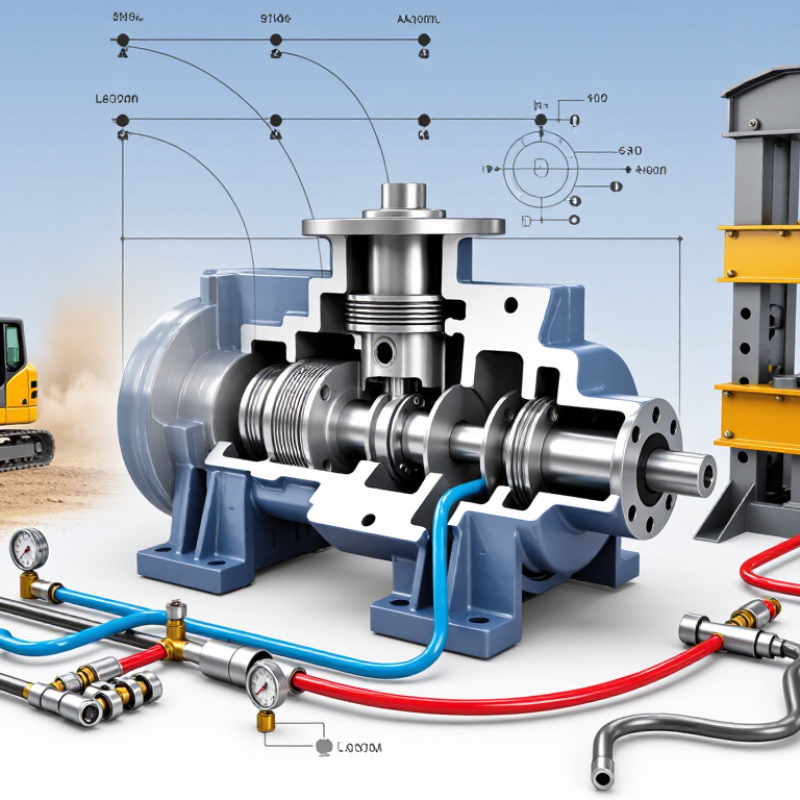
The U.S. Department of Energy’s Improving Pumping System Performance: A Sourcebook for Industry reports that pumping systems use nearly 20% of global electricity. That figure covers pumping systems broadly; it is not specific to axial piston pumps. Still, it explains why matching pump output to demand matters. Axial piston designs are often selected where high pressure and controllable flow are needed, such as mobile machinery or industrial hydraulic circuits. Actual efficiency depends on speed, fluid viscosity, leakage, and operating pressure—not just the pump type. A cold start can make fluid sluggish, while worn clearances can reduce volumetric efficiency. The cutaway diagram makes the mechanism look simple. Real service is less tidy.

How Does an Axial Piston Pump Work?

An axial piston pump converts shaft rotation into controlled hydraulic flow. Inside, a cylinder block rotates with the drive shaft, while pistons sit parallel to it. A tilted swashplate makes each piston slide in and out as the block turns. This movement draws oil through the inlet port, then pushes it toward the outlet through a port plate. Small parts. Precise timing.

The swashplate angle sets piston stroke length. A larger angle usually means greater displacement per revolution; a variable-displacement design can change that angle while running. The pump creates flow, while system resistance determines pressure. That distinction matters when diagnosing slow actuators or rising oil temperatures. A case drain also carries internal leakage away, so blocked drains or contaminated fluid can shorten service life.

The U.S. Department of Energy’s 2006 Improving Pumping System Performance sourcebook reports that pumping systems use nearly 20% of global electricity. That figure covers pumping systems broadly, not axial piston pumps alone, and it is an older estimate. Still, it highlights why matching pump displacement to demand matters. In practice, the right setting depends on the circuit, load, and operating speed; a neat rule of thumb can miss real losses.

What Performance Benefits Does It Offer?

An axial piston pump can deliver high pressure from a relatively compact package. Its pistons move parallel to the drive shaft, turning rotation into hydraulic flow. In variable-displacement models, changing the swashplate angle adjusts output while shaft speed remains nearly steady. That matters. The system can supply only the flow an actuator needs, rather than sending excess oil through a restriction.

This control can improve machine response when loads change. A well-matched pump helps cylinders and motors move smoothly, even when several functions operate at different speeds. Its high power density can also save installation space in mobile equipment. With appropriate controls, reduced throttling may mean less wasted energy and heat. Results vary. Duty cycle, fluid temperature, and system design all affect efficiency.

Performance depends on more than the pump itself. Clean hydraulic fluid, correct alignment, and suitable filtration help protect its close-fitting components. Small details count. A pump can look excellent on paper yet run hot or respond poorly if the circuit is poorly sized. Axial piston designs may also cost more and need careful maintenance than simpler pump types. That trade-off deserves a real operating-cost check, not just a comparison of rated pressure.

Where Are Axial Piston Pumps Commonly Used?

Why Choose an Axial Piston Pump?

Where Are Axial Piston Pumps Commonly Used?

Axial piston pumps appear in compact hydraulic systems that need steady flow under changing loads. On excavators, they supply oil for boom, arm, and bucket movements, often within a crowded engine compartment. Farm tractors use them for steering, implement circuits, and hydrostatic drives. This matters when a machine crawls slowly, then needs stronger flow to lift a heavy attachment. Small detail, big effect. Many designs vary displacement, matching oil delivery to demand instead of constantly pushing full flow. Efficiency still depends on control settings, temperature, and system condition.

In factories, these pumps power presses, plastic molding machines, and metal-forming equipment, where controlled force matters. Marine steering and deck machinery also use them, especially when space and reliable pressure are important. Some vehicles use axial piston units in hydrostatic transmissions, allowing smooth speed control without conventional gear changes. Application choices still deserve care. High pressure alone is not a reason to select one. Engineers need to check required flow, speed range, fluid cleanliness, noise limits, and maintenance access. A pump may look right on a drawing yet run hot when matched poorly to the circuit. That is easy to underestimate.

Why Choose an Axial Piston Pump?

Representative hydraulic system pressure ranges in common applications

Axial piston pumps are valued for efficient operation at high pressure and for variable-displacement control. They are commonly used in mobile construction equipment, agricultural machinery, industrial systems, and marine hydraulics. Pressure ranges are indicative; actual requirements vary by machine and system design.

What Factors Should Guide Your Choice?

Why Choose an Axial Piston Pump?
What Factors Should Guide Your Choice?

When choosing an axial piston pump, start with the machine’s actual operating demands, not its peak rating. Check required flow, working pressure, shaft speed, and how often the load changes. A pump sized only for maximum pressure may run inefficiently during ordinary cycles. Measure the duty, if possible.

Consider whether fixed or variable displacement suits the application. Variable displacement can help match flow to changing demand, but it may add cost and control complexity. Fluid matters, too. Confirm viscosity and temperature limits, and plan for clean, compatible hydraulic fluid. Small contamination can accelerate wear.

Look at the installation and service conditions. Check shaft alignment, available space, case-drain requirements, and access to filters and fittings. Noise and heat during a trial run can reveal problems that a specification sheet misses. A spreadsheet helps, but it cannot capture every site condition. I would leave room for uncertainty and verify the selection with operating data and qualified engineering advice.

Why Choose an Axial Piston Pump? - What Factors Should Guide Your Choice?

Selection factor What to evaluate Why an axial piston pump may be a good fit Practical choice guidance
Pressure requirement Normal operating pressure, pressure peaks, and required safety margin. Axial piston designs are commonly used in high-pressure hydraulic systems. Check the selected pump’s continuous and intermittent pressure ratings. Do not size from peak pressure alone.
Flow and displacement Required flow at the intended shaft speed and operating pressure. A range of displacements is available, and some models provide variable displacement. As a first estimate, flow (L/min) ≈ displacement (cm³/rev) × speed (rpm) × volumetric efficiency ÷ 1,000. Use the pump’s performance data for final sizing.
Variable or fixed flow Whether the system needs flow adjustment as load or actuator demand changes. Variable-displacement versions can adjust output to system demand and may reduce throttling losses in suitable circuits. Choose a control type that matches the circuit, such as pressure compensation or load sensing, where offered. A fixed-displacement pump may suit steady-flow duties.
Energy efficiency Duty cycle, pressure and speed range, and how often the system operates below full demand. A well-matched pump can operate efficiently in high-pressure applications; variable output can help avoid unnecessary flow in some systems. Compare efficiency maps at the actual operating points. Efficiency varies with design, fluid, temperature, pressure, and speed.
Speed range and drive Prime-mover speed, permitted speed range, shaft torque, and rotation direction. Many axial piston pumps can be configured for common industrial and mobile hydraulic drives. Verify minimum and maximum speeds, input power, shaft and mounting compatibility, and any speed limits at high pressure.
Fluid and cleanliness Fluid type, viscosity across the temperature range, filtration, and contamination control. The pump can provide precise, high-pressure service when operated within its fluid and cleanliness requirements. Confirm fluid compatibility and filtration recommendations. Poor fluid condition or contamination can accelerate wear in precision components.
Noise and installation Sound limits, piping layout, mounting stiffness, inlet conditions, and available space. Compact designs can suit machinery where pressure capability and packaging both matter. Review inlet pressure and line sizing, mounting, and measured noise data. Installation and circuit design affect noise and reliability.
Maintenance and lifecycle cost Operating hours, service access, repair capability, spare parts, and expected downtime cost. A durable, correctly applied unit can support demanding service, but precision construction calls for proper maintenance. Compare total lifecycle cost, not purchase price alone. Include filtration, fluid care, inspection, service intervals, and repair availability.
Application match Whether the system needs high pressure, adjustable output, compact packaging, or precise hydraulic control. Often suitable for demanding mobile and industrial circuits, including hydrostatic drives and variable-flow systems. Consider a simpler pump type if the duty is low-pressure, constant-flow, or strongly cost-sensitive and does not need the axial piston pump’s capabilities.

Note: Ratings and performance vary by pump design and operating conditions. Confirm final selection against the specific pump’s technical documentation and the complete hydraulic circuit requirements.

CALL NOW