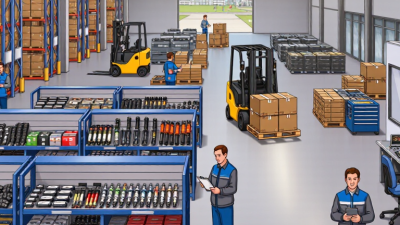
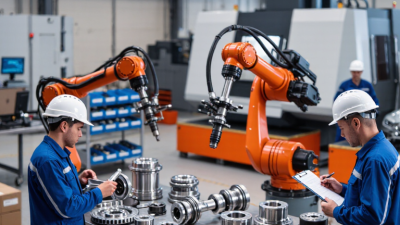
China’s auto spare parts sector is shaped by enormous vehicle production, deep manufacturing networks, and rising demand for reliable replacement components. The China Association of Automobile Manufacturers reported that China produced 30.16 million vehicles and sold 30.09 million in 2023. Those figures signal a vast domestic base for suppliers, but they do not prove that every factory offers consistent quality or dependable delivery.
The opportunity extends beyond China. The Auto Care Association’s 2024 Factbook estimated U.S. light-duty aftermarket sales at about $391 billion in 2023. This estimate describes the wider aftermarket, not Chinese exports alone. Still, it shows why buyers compare suppliers on fit, traceability, testing, and lead times—not price alone. Small details matter. A mislabeled connector or inconsistent finish can delay a repair and weaken trust.
Mary Barra, General Motors’ chair and CEO, has said, “The auto industry is undergoing more change in the next five to 10 years than it has in the last 50.” Her observation concerns the broader industry, yet it applies to suppliers facing electrification, software integration, and changing vehicle designs. This guide introduces ten leading China-based auto spare parts suppliers and the capabilities buyers may wish to examine. Rankings can simplify research, but they cannot replace sample checks, technical reviews, or direct supplier conversations. That limitation is worth remembering.
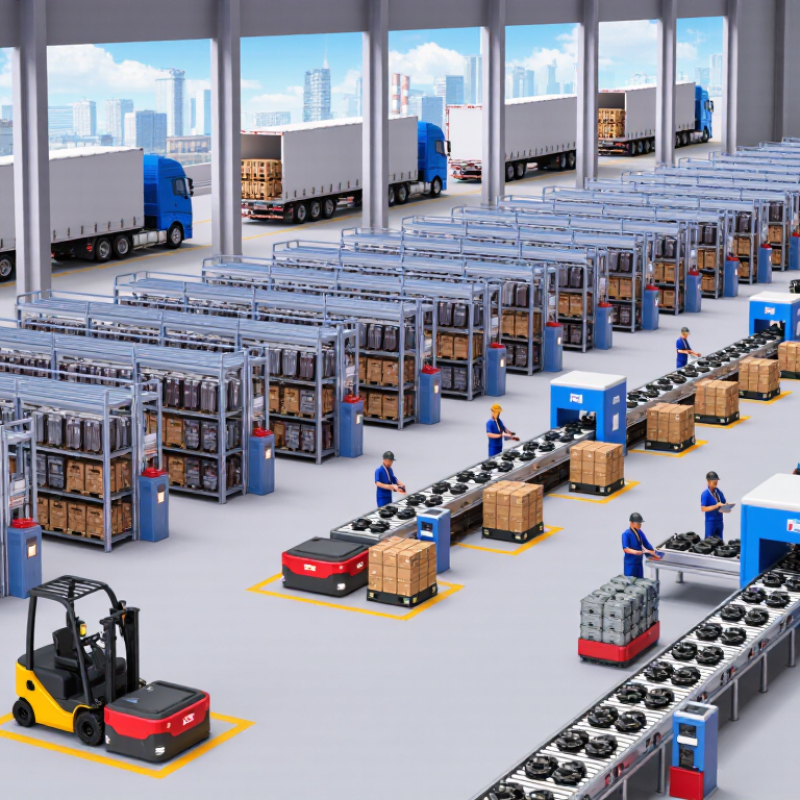
China Top 10 Auto Spare Parts Suppliers
How China’s Auto Spare Parts Supplier Market Is Structured
China’s auto spare parts market is layered, not controlled by ten companies alone. The upstream tier includes steel, rubber, electronics, sensors, and battery-material producers. Tier-one suppliers integrate these components into braking, lighting, thermal, steering, and electronic systems. Smaller factories often support them with machining, molding, wiring, and packaging.
The scale is substantial. According to the China Association of Automobile Manufacturers’ 2024 annual data, China produced about 31.28 million vehicles and sold 31.44 million. New-energy vehicle sales reached approximately 12.87 million. This shift is changing supplier selection. Electric platforms need fewer engine parts but more power electronics, thermal-control units, sensors, and lightweight structures.
The independent aftermarket forms another major layer. It serves vehicles after warranty periods through regional distributors, repair chains, online platforms, and local workshops. General Administration of Customs trade statistics also show China’s continuing role in global parts exports, although product quality varies between suppliers. A professional audit should examine factory capacity, IATF 16949 certification, testing records, traceability, and delivery consistency. Certification alone is not enough. I have seen attractive samples fail during repeated temperature and vibration tests. Buyers should also check tooling ownership, engineering response time, and replacement-part availability. The market is efficient in some areas, but fragmented and difficult to compare fairly.
A supplier’s catalogue can look impressive, but a clear quality process matters more. Check whether the factory maintains traceable inspection records, calibrated measuring tools, and documented procedures for handling defects. IATF 16949 certification can indicate an automotive quality management system; verify its validity and scope directly. Ask for sample inspection reports and confirm that the listed production site matches the one making your parts. Small details count. A connector’s fit or a brake component’s finish can reveal more than a polished brochure.
Production capacity and delivery reliability also deserve close review. The China Association of Automobile Manufacturers reported 31.28 million vehicles produced in China in 2024, reflecting the scale of the country’s automotive sector. That figure does not prove any individual supplier is dependable. Request realistic lead times, recent on-time delivery data, and a plan for tooling or material delays. Check how the supplier manages engineering changes and replacement parts. Independent testing may help, though it adds cost and time. I would not treat a low quotation as proof of value; sometimes the comparison misses packaging, inspection, or after-sales support.
China’s leading auto spare parts suppliers serve both vehicle makers and independent repair networks. Their scale reflects a strong domestic market.
The China Association of Automobile Manufacturers reported 30.16 million vehicles produced and 30.09 million sold in 2023.
The ten supplier profiles cover distinct strengths.
One specializes in engine gaskets and sealing systems.
Another focuses on transmission gears and clutch components.
Braking specialists supply pads, discs, and hydraulic parts.
Steering and suspension manufacturers produce control arms, bushings, and shock absorbers.
Thermal-management suppliers develop radiators, condensers, and cooling modules.
Electrical specialists make sensors, wiring assemblies, and power-control units.
Lighting suppliers provide lamps and signaling components.
Body-part manufacturers produce mirrors, hinges, and stamped panels.
A tenth group supports aftermarket distribution with broad catalogs and regional warehouses.
Product quality varies.
A polished catalog is not proof of factory capability.
Tips:
China’s leading auto spare parts suppliers compete through range, consistency, and scalable production. According to OICA, global motor-vehicle production reached 93.5 million units in 2023. This volume demands reliable sourcing. Strong suppliers usually cover braking systems, suspension parts, steering components, filters, lighting, sensors, and engine accessories. Their product catalogs often support both passenger cars and commercial vehicles. However, a wide range can hide uneven control between product lines.
Quality begins with traceability. Many export-oriented factories operate under ISO 9001 and IATF 16949 quality systems. These frameworks control inspection, corrective action, and production records. Suppliers also use APQP, PPAP, material testing, and end-of-line checks.
In practice, a brake pad may receive friction testing, dimensional inspection, and batch identification. A sensor may undergo temperature, vibration, and electrical testing. Certificates help. They do not prove zero defects.
Manufacturing strength is visible in tooling capacity, automated assembly, laboratory equipment, and stable raw-material supply. Industry research from Deloitte’s 2024 global automotive supplier analysis highlights continuing pressure on suppliers to improve resilience, cost control, and digital manufacturing. That pressure is clear in China’s export factories. Some use machine-vision inspection and real-time production dashboards. Others still depend heavily on manual checks. That difference matters. Buyers should review audit records, failure rates, warranty data, and sample performance before selecting a top-ten supplier. Supplier rankings alone are not enough.
China’s auto-parts supply base is broad, so a “top 10” list is only a starting point. Compare suppliers by part-level experience, production capacity, lead time, and documented quality controls—not catalogue size alone. The China Association of Automobile Manufacturers reported 30.16 million vehicle sales in China in 2023. That scale signals a deep manufacturing ecosystem, but it does not prove that any individual factory can meet your specification. Ask for a dated quotation, drawings, material details, and a sample from the actual production line. Small differences matter.
Verify before you pay. Check that the legal company name matches the quotation, bank details, and contract, and request recent audit records and inspection reports. For critical parts, arrange an independent pre-shipment inspection and agree on measurable acceptance criteria, such as dimensions, finish, and packaging. The Auto Care Association’s 2024 Factbook estimated the U.S. automotive aftermarket at about $391 billion in 2023. This is one market, not a forecast for every region, but it illustrates the scale—and competition—behind replacement-parts demand. Request references for comparable export orders, while protecting confidential customer information. Then compare landed cost, including freight, duties, testing, and likely warranty handling. A low unit price can hide expensive delays. I would still verify every claim; a polished factory video is not evidence.