• (714) 253-3115

10 Best Parts Engine Suppliers for Global Buyers

Choosing a reliable parts engine supplier is not a simple price comparison. Global buyers must examine machining accuracy, material traceability, testing records, warranty terms, and communication speed. A polished website proves very little.

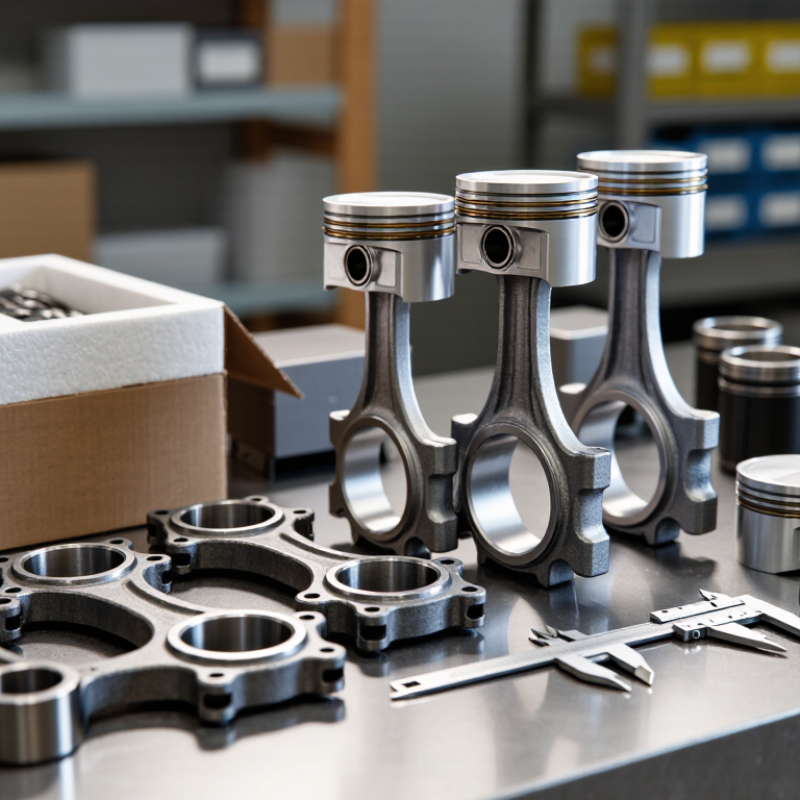
Mike Mavrigian, a respected automotive engine-building author, states, “Precision is the difference between an engine that runs and one that lasts.” This principle applies directly to every parts engine purchase. A connecting rod may look acceptable under warehouse lighting, yet poor tolerances can cause vibration, oil loss, or premature failure after installation. Small details matter.

This guide reviews ten leading parts engine suppliers for international buyers. It considers product range, manufacturing consistency, export experience, technical support, and replacement policies. It also looks beyond marketing claims. Can the supplier provide inspection reports? Are dimensions clearly documented? Does the packaging protect machined surfaces during a long sea journey?

Not every supplier will fit every project. Some offer strong prices but limited engineering support. Others provide excellent customization but require larger minimum orders. That trade-off deserves honest attention.

The shortlist is useful, but it is not perfect. Supplier performance can change with factories, materials, and regional demand. Buyers should verify current certifications, samples, references, and delivery terms before placing a substantial order. A careful decision begins with evidence, not confidence.
10 Best Parts Engine Suppliers for Global Buyers

What Engine Parts Suppliers Provide and Why Global Buyers Need Them

Engine parts suppliers do more than ship replacement components. They connect global buyers with pistons, cylinder heads, gaskets, bearings, fuel-system parts, and complete repair kits. Reliable suppliers usually provide detailed catalogs, dimensional data, material specifications, and compatibility guidance. These details matter when a small measurement error can stop an engine rebuild.

Professional suppliers also support quality control before shipment. They may provide inspection reports, batch numbers, hardness readings, and test results for critical components. Some offer sample orders, technical drawings, and photo confirmation before production. This practical evidence helps buyers compare parts beyond price. It also creates traceability when a component reaches a workshop thousands of miles away.

Global buyers need suppliers who understand international purchasing challenges. They may require export packaging, clear invoices, translated manuals, and shipment tracking. A strong supplier can recommend suitable alternatives when an original part is unavailable, but should never hide differences in materials or specifications. That distinction protects repair quality and operating safety. Still, no supplier is perfect. Catalog data can contain outdated applications, and shipping damage can occur despite careful packing. Buyers should verify measurements, request current documents, and inspect received parts before installation. A good relationship includes honest questions, written confirmations, and a clear warranty process. Small habits prevent expensive mistakes.

Key Criteria for Evaluating International Engine Parts Suppliers

Choosing an international engine parts supplier requires more than comparing catalog prices. Real-world fit matters. Start with technical accuracy. Ask for drawings, material grades, dimensional tolerances, and compatible engine codes. A reliable supplier should explain these details clearly, not hide behind broad claims. Request inspection reports, batch numbers, and traceability records for critical components such as pistons, bearings, and gaskets. Photos of packaging can reveal practical care: sealed bags, labeled cartons, and moisture protection.

Experience becomes visible during sampling. Order a small evaluation batch before committing to volume. Check machining marks, surface finish, weight consistency, and installation fit with qualified technicians. The supplier should provide test methods and respond to technical questions without delay. Independent quality certifications can support credibility, but certificates alone are not proof of consistent production. Verify issuing bodies, certificate scope, and expiration dates. In practice, unclear answers often create larger costs later.

Commercial reliability also deserves close review. Compare lead times, minimum order quantities, payment terms, warranty language, and replacement procedures. Ask how urgent shortages are handled across borders. Strong suppliers share realistic delivery dates and explain possible delays early. Their export documents should match the goods, quantities, and destination requirements. Communication quality matters. One overlooked detail can stop an entire repair schedule. No checklist is perfect. Reassess the supplier after each shipment, especially when packaging, fit, or response time falls below expectation.

How the Top Ten Engine Parts Suppliers Compare by Product Range

10 Best Parts Engine Suppliers for Global Buyers

The top ten engine parts suppliers differ mainly in product range, not catalog size. Strong suppliers cover pistons, rings, bearings, gaskets, valves, pumps, and timing components. Some also provide cylinder heads, turbocharger parts, sensors, and complete repair kits. A broad range helps buyers reduce split shipments and match parts across one engine family. However, wider coverage does not always mean better quality. Product depth matters.

During supplier reviews, check applications, material specifications, dimensional tolerances, and test documentation. Reliable suppliers explain whether parts fit passenger vehicles, trucks, agricultural equipment, or industrial engines. Some offer standard and oversized components for controlled repairs. Others focus on fast-moving replacement parts. The best choice depends on your workshop’s actual demand. No supplier is perfect. A catalog can look impressive yet hide gaps in older models.

Tips: Request sample parts before bulk orders. Compare drawings, packaging, and markings. Confirm batch traceability and warranty terms. Ask how complaints are investigated. Clear answers reveal more than polished sales language. Buyers should also verify export documents and local compliance requirements before shipment. One overlooked detail, such as an incorrect gasket thickness, can delay an entire repair. Recheck the critical dimensions.

Top Ten Engine Parts Suppliers: Product-Range Coverage

This comparison measures how many of ten core engine-part categories are publicly represented across leading global supplier catalogs. Gaskets, bearings, pistons, and piston rings show the broadest coverage, while turbochargers are more specialized.

Quality, Certification, Pricing, and Supply Capacity Across the Ten Suppliers

For global buyers, the ten best engine-parts suppliers should be judged beyond catalog size. Quality systems matter first. IATF 16949 certification supports process control for automotive production, while ISO 9001 strengthens documented quality management. OICA reported about 93.5 million motor vehicles produced worldwide in 2023. That volume demands stable capacity, not occasional excellence. I also check material traceability, inspection records, warranty terms, and batch consistency. A supplier may offer excellent samples, yet repeat orders can reveal weaker controls.

Certification alone is not enough. Pricing should include tooling, testing, packaging, freight, and possible minimum order quantities. The International Energy Agency reported nearly 14 million electric car sales in 2023, showing how quickly powertrain demand is changing. Engine-parts suppliers therefore need flexible machining, mixed-product capacity, and realistic lead times. I prefer suppliers that disclose monthly output, backup facilities, and capacity utilization. Their quotes should explain currency assumptions and raw-material adjustments. Some claims remain difficult to verify. That deserves caution.

Tips: Request three production samples and an independent dimensional report. Compare total landed cost, not unit price. Ask for current IATF 16949 certificates and audit scope. Check whether certificates cover the actual factory. Review delivery performance across six months. A slightly higher price may reduce costly line stoppages. Still, no supplier is perfect; buyers should record defects, delays, and corrective actions before approving long-term supply. Sources: OICA 2023 Production Statistics; IEA Global EV Outlook 2024.

10 Best Parts Engine Suppliers for Global Buyers - Quality, Certification, Pricing, and Supply Capacity Across the Ten Suppliers

Supplier Primary Product Scope Quality Rating
(out of 5)
Common Certifications Typical MOQ Typical Lead Time Pricing Position Annual Capacity Band Best Fit for Global Buyers
Supplier 01 Engine bearings, bushings, thrust washers 4.7 ISO 9001; IATF 16949 available for automotive programs 100–500 sets 25–45 days Mid-range 1–5 million units Aftermarket distributors and medium-volume rebuilders
Supplier 02 Pistons, piston rings, wrist pins 4.6 ISO 9001; ISO 14001; production traceability systems 200–1,000 sets 30–60 days Competitive 500,000–2 million sets Fleet maintenance, engine rebuilders, and export wholesalers
Supplier 03 Cylinder liners, sleeves, and related machining 4.5 ISO 9001; dimensional inspection to customer drawings 50–300 pieces 35–70 days Value-oriented 100,000–750,000 pieces Heavy-duty engines, agricultural equipment, and industrial repairs
Supplier 04 Gaskets, seals, and complete overhaul kits 4.4 ISO 9001; material certificates available by order 100–1,000 kits 20–40 days Low to mid-range 250,000–1 million kits Fast-moving aftermarket programs and private-label packaging
Supplier 05 Valves, valve guides, springs, and retainers 4.6 ISO 9001; IATF 16949 commonly required for OEM supply 200–800 sets 30–55 days Mid-range 500,000–3 million pieces Performance-oriented rebuilders and regional distributors
Supplier 06 Connecting rods, crankshaft components, and hardware 4.3 ISO 9001; tensile, hardness, and fatigue testing available 50–250 pieces 40–75 days Competitive 75,000–400,000 pieces Custom-engineered orders and low-to-medium volume projects
Supplier 07 Oil pumps, water pumps, and engine cooling components 4.2 ISO 9001; leak, pressure, and flow testing 100–500 pieces 35–65 days Mid-range 100,000–800,000 units Commercial vehicles, industrial engines, and service networks
Supplier 08 Turbocharger service parts and air-management components 4.1 ISO 9001; balancing and dimensional reports available 50–200 kits 30–60 days Value-oriented 50,000–300,000 kits Turbocharger repair shops and independent aftermarket sellers
Supplier 09 Fuel-system components and injection service parts 4.4 ISO 9001; cleanliness, pressure, and flow-control procedures 100–500 pieces 40–80 days Mid to premium 100,000–600,000 units Specialized repair centers requiring inspection documentation
Supplier 10 Complete engine assemblies and replacement long blocks 4.5 ISO 9001; end-of-line testing and serial-number traceability 10–50 assemblies 45–90 days Premium 5,000–50,000 assemblies Rental fleets, export service centers, and engine replacement programs

Note: The figures are supplier-category benchmarks expressed as typical ranges. Actual certification scope, pricing, minimum order quantity, lead time, and production capacity should be confirmed through current documentation and a formal quotation.

How to Choose the Right Engine Parts Supplier for Your Market

Choosing the right engine parts supplier starts with your market, not a popular product list. A supplier for heavy-duty trucks may not understand passenger vehicles, agricultural machines, or industrial equipment. Define engine models, operating temperatures, expected volumes, and local service conditions. This prevents costly mismatches.

Ask for material specifications, dimensional drawings, inspection records, and batch traceability. Reliable suppliers should explain how they control machining, heat treatment, surface finishing, and final testing. Request samples before placing a large order. Check fitment carefully, because a part that looks correct may still fail under load. Independent testing can add confidence when the application is safety-critical. Clear communication matters too. Delayed answers often become delayed shipments.

Tips: Compare at least three suppliers using the same questions. Review warranty terms, replacement procedures, packaging quality, and delivery history. Confirm whether technical documents match your market’s language and compliance needs. A supplier should provide practical support after delivery, not only a sales quotation. Visit the facility when possible, or arrange a live production audit. Photos are useful, but they are not proof. I have seen attractive samples hide inconsistent production, so regular batch checks remain important. Price deserves attention, yet the cheapest part can create higher costs through downtime, returns, and difficult installation. Reconsider your supplier score after every shipment. Metrics can expose problems that first impressions miss.

CALL NOW